
At its heart this blog is about business and social progress. Business is part of society, so we should want business to be making the world better. It can do so, but that isn’t the same as saying it does so and will always do so. My final post on Kate’s Marvel’s Human Nature book looks at this intersection of business and society.
Business And Social Progress: Help Or Hindrance?
There seems to be two extremes, neither of which seem to have much in the way of intellectual backing.
The idea that if we leave business alone it will sort everything out is pretty silly. Business people respond to incentives. Given these incentives often aren’t perfectly aligned with social progress this means that, of course, business can take actions that hurt the world.
The opposite idea, that business is pure evil also seems ill-informed. Businesses succeed best in functioning markets because they solve problems for people. It is hard for governments to even know everyone’s problems, never mind solve them all. Business operating in competitive markets can prove an invaluable source of social progress by finding a way to address needs.
A dogmatic pro-business or pro-government position isn’t going to get us where we want to be.
Markets may be powerful, but they are not enough. Markets found an alternative to whale oil in kerosene and gas; whaling increased nonetheless. It took a ban to save the whales.
Marvel, 2025, page 186
Businesses Can Be Good And Bad
Marvel stressed that business works with governments in ways that can help or hinder social progress.
In the 1970s, Exxon wanted to take advantage of federal science funding and investigate whether to diversify its energy strategy. The company built a thriving, impartial science program. And the information it gathered was not siloed or locked away.
Marvel, 2025, page 39
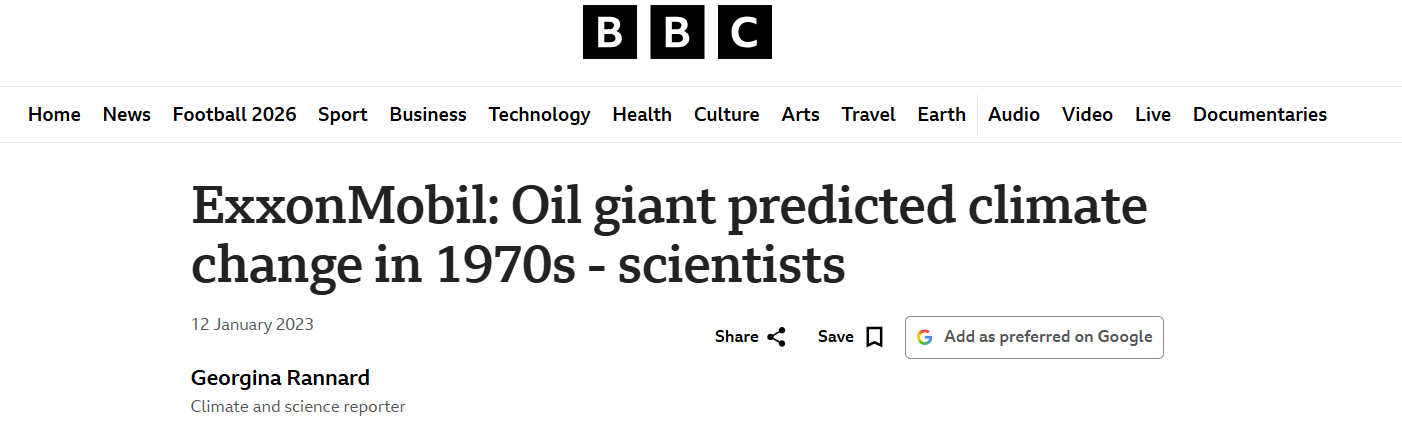
Exxon helped us understand climate science. And then promptly seemed to have “forgotten” what they learned. Exxon’s amnesia shows why it is important for government to not always listen to everything business says.
Want another example? Chemical companies formed an alliance to fight to keep using ozone layer killing chemicals even when there were better alternatives saying mandating change would be economic suicide. When CFCs (chlorofluorocarbons) were eventually banned it turned out it wasn’t a big deal for the economy but it was great for the environment and the people living on the planet.
The message for public policy makers seems to be, do keep good lines of communication with business. There can be valuable knowledge there. Still, don’t believe every protestation that any action will destroy the economy. Often it is just business people being lazy and not wanting to change.
The King Of Terrible Ideas
A fascinating aside in Kate Marvel’s book was her highlighting of Thomas Midgley as the “twentieth-century king of terrible ideas” (page 202). He does seem to have had a uniquely awful impact on the world.
There was a problem with gasoline engines. Midgley had the idea to add lead. It solved the minor immediate problem and caused massive long-terms problems to human health. He also invented CFCs, and in doing so led humanities attack on the ozone layer that protects us from the sun’s rays.
When you make a mistake console yourself with the thought that whatever you did was still not as bad as Thomas Midgley’s average Tuesday.
For more on climate change see Do Americans Believe In Climate Change?, Growth Can Come From Climate Action, The Pope And The Climate Crisis, and Teaching About Climate Change
Read: Kate Marvel (2025) Human Nature: Nine Ways To Feel About Our Changing Planet, Ecco Press