
A 2023 paper in the Journal of Public Policy and Marketing looked at people’s response to corporate political advocacy. It was a timely piece (at least by academic standards) given the prior few years had seen notable involvements of companies in political debates. To be clear I’d say some of this involvement wasn’t deliberate. To the companies sometimes politics intruded into things that used to be fairly uncontroversial. For the sake of today’s discussion this distinction doesn’t really matter. People, including consumers, perceived the the companies as having a political agenda and the reacted to this.
CPA and CSR
The authors do a good job of differentiating between CSR (Corporate Social Responsibility) and CPA (Corporate Political Advocacy). In essence, CSR embraces causes that (nearly) all people agree are good, even if we don’t all agree they are the perfect cause. No one is actively hostile to giving books to kids even if they don’t think that it is the best use of scarce money. (I hope although I guess it may depend on the book). CPA, on the other hand, can alienate people. A cause might be, ‘let’s work to ban cruel sports’ but some people like cruel sports, (really bizarrely that is true).
Studying CPA and CSR can be hard given they manifest in many different ways. The authors use examples of CSR that include hiring veterans. This seems reasonable but another related cause, hiring refugees, conducted in 2017 was also seen as CSR These seem similar but you can certainly find people nowadays who aren’t fans of hiring refugees. Would this be CPA in 2026 but CSR in 2017?
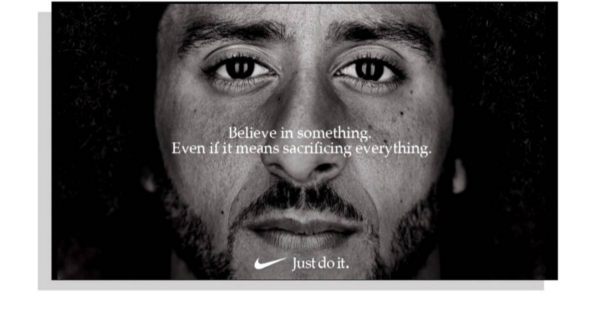
On the CPA front they grouped together both Delta ending a partnership with the NRA (National Rifle Association), a choice which likely was designed to avoid controversy, with Nike’s promotion of Colin Kaepernick, which Nike surely knew would be controversial.
CPA Leads To Controversy
The authors find CPA leads to the public reacting to it as a controversial positioning. Many people do not like it. This causes a problem though. Did Delta, in dumping the NRA, seek controversy or just find controversy thrust upon them and tried to extricate themselves from being in the middle of a storm. Strategically these choices are very different. If getting out of a no win situation is classed as CPA it is never going to look great. There may, after all, be no way to win.
Response To Corporate Political Advocacy
The authors get some secondary (not generated by them) data from Twitter and looked at responses to CSR and CPA activities. People like the CSR and didn’t really like the CPA. This wasn’t a experimental test but they did get a representative sample of the US and asked them about a scenario. They varied whether it was CPA or CSR, the approach was liberal or conservative and had 5 causes within each of the 4 groups. For example, Gun Rights was one of the five Conservative CPA causes. It turns out brand attitudes were lower after CPA than CSR, with CPA being seen as less appropriate and more controversial.
Broadly speaking I buy that. CPA is harder than CSR. Any fool can give money to puppies and be seen as a good company.
Where they lost me was the weirdly over-the-top discussion. I was a little worried they were pressed into it by a reviewer as the tone was a bit odd.
“…our core contention is that CPA has “crossed a line” in the minds of many consumers, moving from appropriate firm actions viewed as socially responsible to controversial firm activities aimed at influencing social policy.”
Weber and colleagues, 2023, page 79
The above statement isn’t a research statement. It is a random opinion. Who sets the line? Why is there a line? Why is controversy necessarily bad? Why is influencing social policy bad?
Measures Matter
I think there argument might hinge upon the idea that the line is crossed if CPA hurts financial outcomes. Fair enough, but they give no evidence of this.
From a practical perspective, the current work suggests that firms should be more cautious and deliberate when engaging with society through CPA than when engaging through CSR if their end goal is only financial in the near term.
Weber and colleagues, 2023, page 89
The weird thing is that they give no financial measure in their work. While the advice to be cautious and deliberate may be valid for financial reason, that advice isn’t informed by this study. You can’t get to financial outcomes from brand attitudes or even purchase intentions. You need much more. What if the CPA drives up willingness to pay to compensate for any lost sales? What if the CPA is part of a long-term repositioning strategy? You can’t get at that from a seven point scale on a short questionnaire.
The idea that CPA is bad, is a bit too unsophisticated for my liking.
False Equivalency
Their implications for policy makers include a false equivalence.
Democrats have introduced various forms of legislation with the goal of ensuring certification of election results and setting standardized national rules for elections … Republicans have passed a litany of laws at the state level aimed at reducing “voter fraud” … While differing thematically and strategically, both parties are sending essentially the same message to their voters with their proposed policies: the other party is going to try to steal the next election and this is how we stop them.
Weber and colleagues, 2023, page 89
In a democracy working to ensure that votes are counted is not the same as restricting voting. More pertinently, I’m not sure what this has to do with CPA.
For more on CPA see Corporate Political Advocacy and Can Political Advocacy Be Profitable?
Read: Todd J. Weber, Jeff Joireman, David E. Sprott, and Chris Hydock. “Differential response to corporate political advocacy and corporate social responsibility: Implications for political polarization and radicalization.” Journal of Public Policy & Marketing 42, no. 1 (2023): 74-93.
