
Marketing Metrics, 4th Edition
Marketing Metrics 4th Edition is now available. We like to think of it as the definitive guide to the metrics that marketers can, and often should, use in their jobs. We cover how the metrics are constructed. The book contains many formulas all written in simple ways. (There is no need for advanced math).
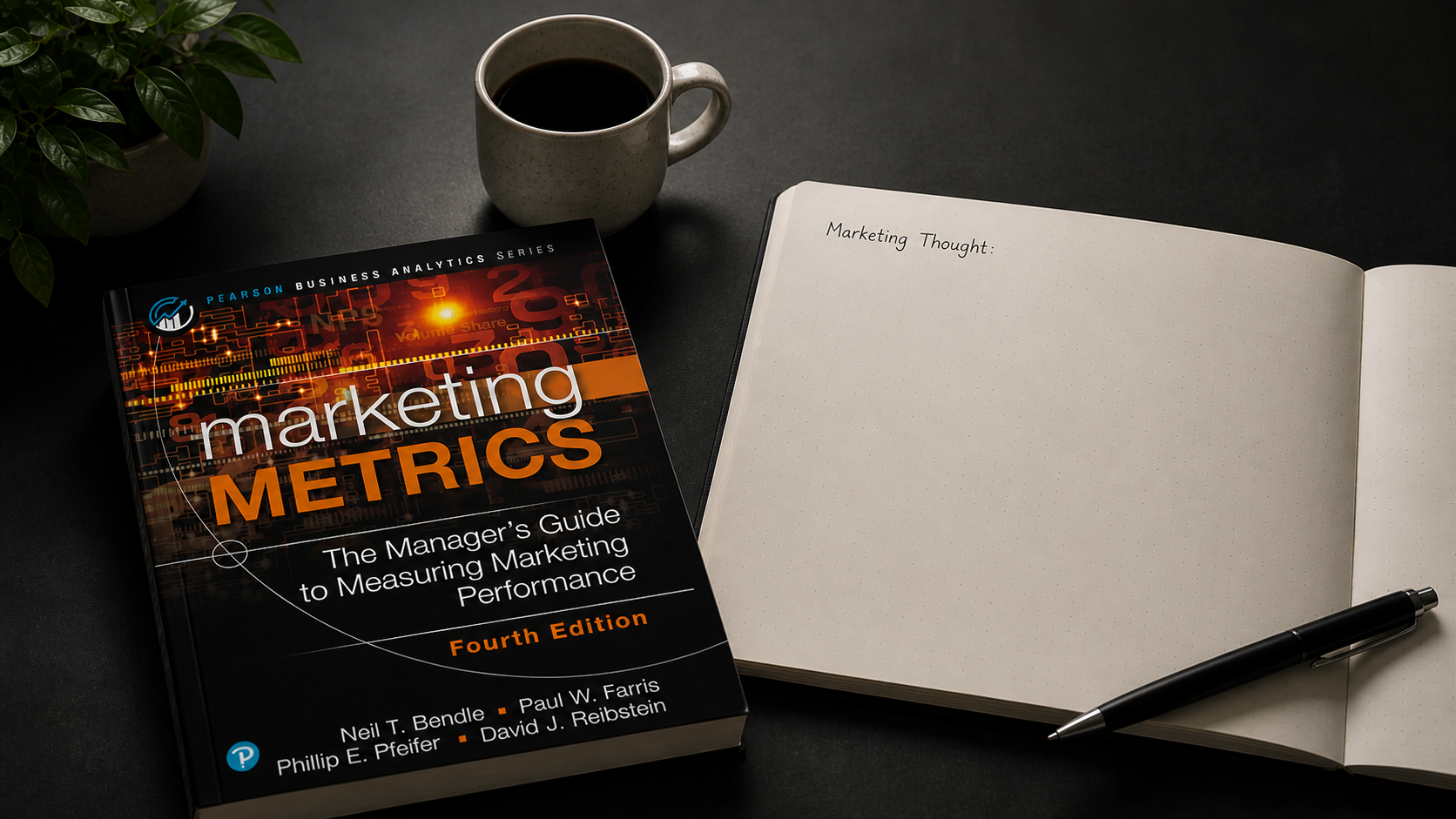
Our Aim With Marketing Metrics
A key task we set ourselves was to explain the uses of each metric. Part of that is explaining some cautions. We note where people might typically get into trouble with their use of metrics.
The first three editions have been a great success. We are very grateful to those who have bought the book and recommended it to others. Each edition has generated substanitial sales and have, we believe, improved on the last. For example, the fourth edition discusses more on what a CMO will need to know chatting to finance people. We also discuss sponsorship metrics more extensively. The new edition also surveys changes over the years including the work of MASB and the new ISO brand evaluation standard, see here.
Order the Book Now
You can order it now — save 35% at informit.com/marketing-metrics if you enter the code METRICS during checkout.
For a free sample chapter of the 4th edition of Marketing Metrics please click here.

Please Review
We are always happy to hear feedback. As such, we would be grateful if you would share your thoughts on the book on Amazon. Feel free to share too on social media. If you have comments about the book also do send them directly to me.
In addition, we are not sure if there will be a 5th edition yet. Still if there is we would love to incorporate any ideas/improvements you suggest if space permits.
Popular Marketing Metrics
While you are here please visit other posts and pages on my site, click here. Those interested in marketing metrics should be especially interested in my Popular Marketing Metrics pages listed below. In these, I outline my thought on various metrics. Some of the thoughts are a bit too controversial for the book — which is more of a consensus view.
-
Market Share: Always An Indicator Never A Target
A Popular Performance Metric But Why? Market share is a very widely used metric. It is often referred to as a specifically marketing metric because people in finance often don’t use it as much. It is simple to create. One can use the units you sell and compare that to unit sales in the entire…
-
Tobin’s Q: Why Academics Should Listen To Managers
Has A Manager Ever Used Tobin’s Q? Ask an academic where they know Neil Bendle from and they might cite my work arguing that Accounting-based Approximations of Tobin’s q (AATQ) should never be used as a performance metric. (I don’t mean to imply that I think that I’m properly famous in the sense that normal…
-
Measuring Competition With The Bendle Panda Index
Marketing Metrics And Understanding Markets Most metrics we discuss are related to the firm, or even the individual consumer. At some point in strategy discussions, however, a marketer will want to know what the market in general is like. Is this a very competitive market or not? How do we measure that? I have developed…
-
Net Promoter Score: Sadly Not As Magical As Supporters Suggest
The Net Promoter Score is a strange metric. It has broken through in ways that no other marketing metric that I can think of has. It is a very popular recommendation metric. But recommendations are complex. Looking at the photo you can ask whether I would recommend summer holidays in Atlantic Canada? Maybe we need…
-
How To Use, And Misuse, Customer Lifetime Value (CLV)
Or, You Could Do It That Way But Why Would You Do That? Customer Lifetime Value (CLV) is a very useful metric. (Technically, prediction/estimate I guess). It is the dollar value of a customer relationship, based on the present value of the projected future cash flows from the customer relationship. That said, it has to be…
-
Is ROI The Most Abused Term In Marketing?
Return on investment (ROI) is a good thing. It conjures up all sorts of positive connotations. As such it is understandable that marketers want to use the term. The challenge is that often it is used in a ‘motherhood and apple pie’ sort of way. If you can point to something good then you call…