
Eric Ries’ book, Incorruptible, centers around the challenge of mainitaining a purpose. The (mostly) villain of the piece is the way business is currently done, specifically how it is funded. He calls this financial gravity. So how do we go about defying financial gravity without having to watch dubious movies?
Financial Gravity
What then is financial gravity? It is a psychologically process; the way things are done. It creates a focus on getting money to the owners as quickly as possible without any consideration of why the company exists, or indeed why it has been successful in the past. It is closely related to shareholder primacy.
Financial gravity constantly pulls organizations towards exploiting the trust they’ve built up and milking it for short-term gain.
Ries, 2026, page 124
The Spiritual Holding Company
A central piece of staying Incorruptible is having a strong purpose beyond just making money for the owners. The challenge is that the way business is done leads companies to make decisions that make money in the short-term, often at the expense of long-term interests.
There are a number of solutions that Ries suggests but a key is the spiritual holding company.
A spiritual holding company is a separate entity with governance authority over one or more organizations, designed specifically to protect and advance their core mission over the long term.
Ries, 2026, page 232
The idea is that this takes power away from the short-term shareholders. Those running the spiritual holding company need to have the interests of the company in mind, but it is the long-term interests to achieve a given mission. Without something to protect the missions, companies become what Ries calls mission-hopeful. With such an aim it would be nice if the companies did something positive for the world but there is nothing to ensure that happens.
Defying Financial Gravity
I should say that I do see the arguments against this. (It took me a while to feel comfortable nodding along with the sort of ideas that Ries suggest). The spiritual holding company takes power away from shareholders, this could make managers/founders complacent and a bit crazy. Elon Musk seems to have taken total power over his companies so he can create a master race (of robots?) or whatever is this year’s nonsense.
The reason why I can get onboard with Ries is that giving short-term shareholders total control is a major problem. They can destroy the livelihoods of employees for a few bucks. They can abandon brand equity that has taken years to build. Think a soccer/football team — it is much more than the plaything of the current owners.
You need the spiritual holding company to stop short-term financial pressures from derailing projects, often built over generations. Defying financial gravity involves giving someone the power to insist that the organization can fly even when staying on the ground seems safer.
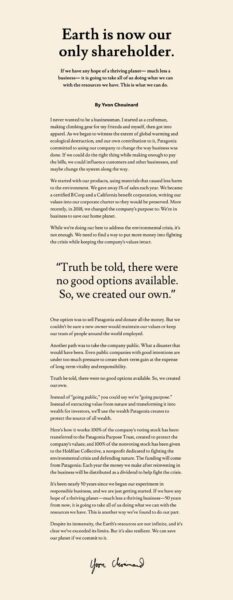
Mission Transmission
One of the exciting things about companies with strong cores that are incorruptible is that they set an example. This create mission transmission. The more we see companies doing things others say aren’t possible, the easier it becomes to be better for other firms.
For more on battling short-termism see Finance for the Long-term and Marketing Response to Stock Market Pressures
Read: Eric Ries (2026) Incorruptible: Why Good Companies Go Bad… and How Great Companies Stay Great, Simon & Schuster