
I must confess I wasn’t sure when I approached the new Eric Ries book. From what I had seen he seemed a bit like a self-help guru for entrepreneurs. My assumption was completely unfair. He has an important book, Incorruptible, aimed primarily at founders. it details how they can create and, critically maintain, great companies that actually make the world a better place. Ries makes powerful points that I will revisit over a few weeks. First, I’ll return to a classic idea — shareholder primacy is baffling.
Shareholder Primacy And Externalities
Shareholder primacy is sold as a simple notion. Get managers to focus on one thing and they will do a good job. Even if that one thing isn’t everything that matters the hope is that other people can focus on the other things. The problem is that life is, and has never been, that simple.
There has never been a company that made no impact upon the world, good or bad, while making money. There are plenty of examples where companies have made the world worse, e.g., smog, fertilizer run off, cigarettes. There are plenty of examples where companies have made the world better, e.g., medicines, transport, peanut butter. You can’t just pretend business happens in another dimension from the rest of us.
Shareholder Primacy Is Baffling
The thing about shareholder primacy is that it says to managers ‘don’t worry about the externalities’. The idea is simply weird. Those working in business are usually the experts on their products. They are often the ones best placed to know about their impacts, and so they know what can be more effectively done to improve their impact. Given that they are best placed to make the impacts more positive, let’s encourage businesspeople to worry about their impact.
This idea — that business owes a duty to its workers, the community, the world — was just taken for granted by many businesspeople throughout history. Many companies we know nowadays thrived because their founders instilled them with a clear purpose to make the world better.
R.W. Johnson had wanted to see the company’s mission and ethos protected at the board level, before the IPO [sale to outside owners]. He would have been baffled by the assertion that J&J existed only to enrich shareholders.
Reis, 2026, page 139
R.W. Johnson even wrote the famous J&J credo in an attempt to inculcate values throughout the organization.
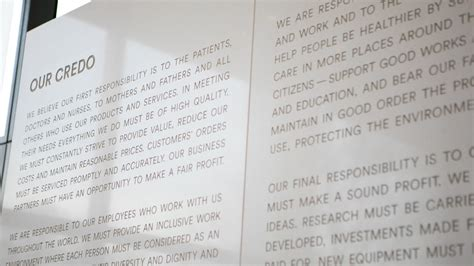
Owners Often Want To Be Decent
Owners typically don’t start thinking they are going to screw the world over to make money, but that does seem to happen more than we would hope. Often the founder is forced out just when have finally built something worth taking over. The history of Robert Owen’s better form of business in the early 19th century has so many positives. He transformed the lives of the people in his part of Scotland. That said, it didn’t last. Robert Owen invested in the people that he worked with, this created a valuable company. Others sucked the company dry of the value the better business practices had created.
One of the most interesting parts of Ries’ book is the catalog of “unusual” failures. Basically he shows they aren’t at all unusual. The catalog features companies that started out looking to make a positive impact but from a variety of takeovers, betrayals, and failed successions lost their mission. The companies abandoned what made them special with a terrible impact on the business even from a purely financial perspective. Ries has much more to say on how to secure against these negative impacts which I’ll discuss in later posts.
Fore more on business history, Regulation and Business Responsibility, Social Change Will Always Face Setbacks, Business Ideas Change, Can Virtuous Capitalism Be Sustained?, and Buying and Selling Attention.
Read: Eric Ries (2026) Incorruptible: Why Good Companies Go Bad… and How Great Companies Stay Great, Simon & Schuster