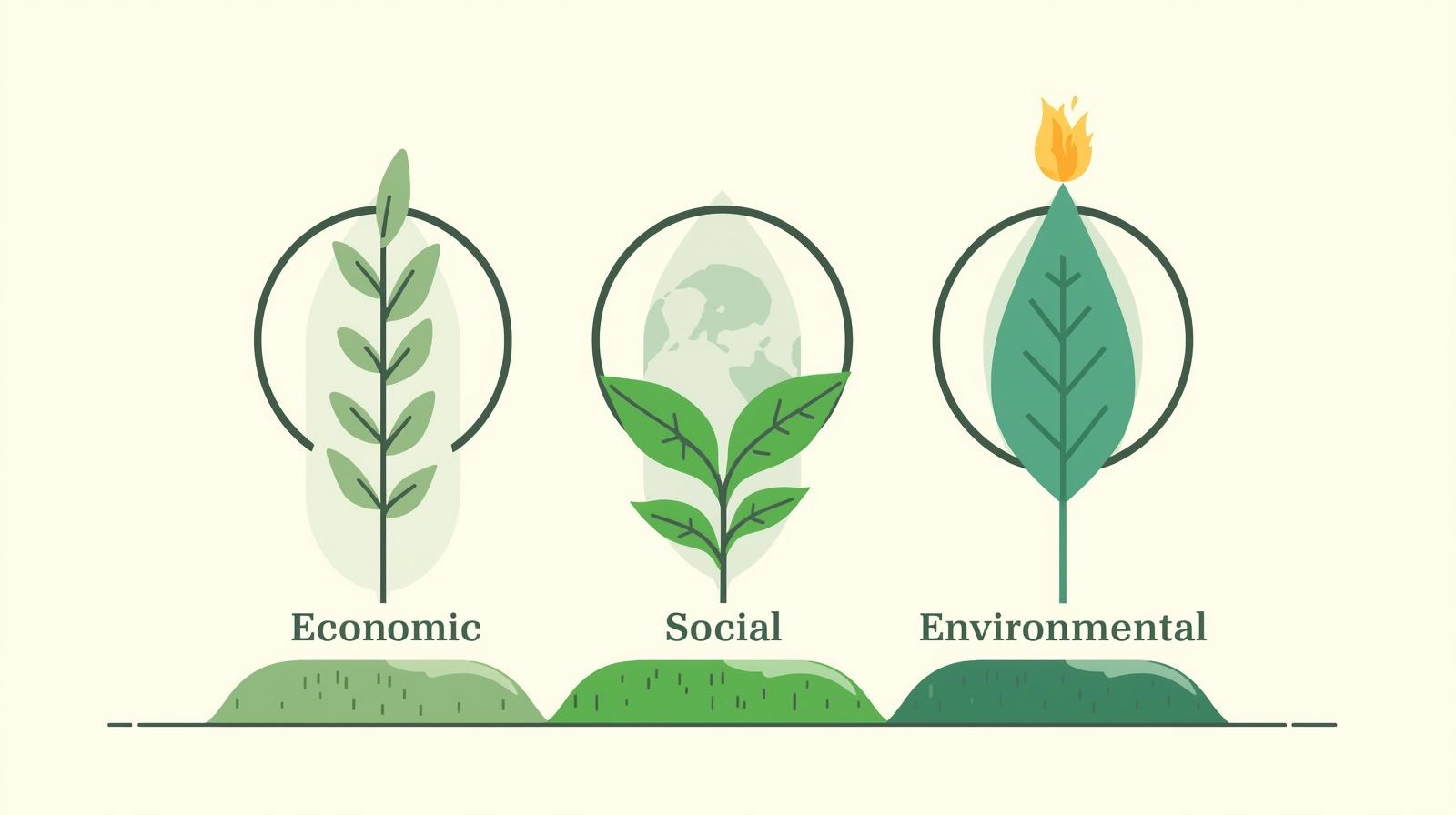
John’s Elkington’s Cannibals with Forks is a major book in the field of sustainable business. This drove adoption of the idea of the Triple Bottom Line — managing businesses with a concern for the economic, social, and environmental consequences. Elkington, as a consultant, has a pragmatic attitude. He is all about companies winning commercially by embracing sustainability. But how can sustainability win commercially?
The World Isn’t A Simple Math Model
There is a superficial appeal to the idea that if sustainable businesspeople worry about more things than non-sustainable colleagues, i.e., social and environmental concerns are added to profit concerns, then they can’t be as effective at achieving profit. Given profit is the one thing the non-sustainable business is assumed to focus on. Maybe that is true in a simple math model, but the world isn’t a simple math model.
People react differently when businesses behave differently. Obviously, consumers might be expected to prefer a company that wouldn’t poison them to make a buck if the company could get away with it. Employees work harder if they don’t hate their employers. It doesn’t take too much thought to come up with reasons why only caring about shareholders is a bit of a rubbish strategy even from a purely customer satisfaction and employee motivation perspective.
But the benefits of sustainability go beyond this.
How Can Sustainability Win Commercially?
Managers look at the world differently too when sustainability concerns are embraced. When asked to think more broadly managers often think better. Elkington’s book is full of examples of how sustainability drives better commercial outcomes. (Admittedly, given it was written nearly 30 years ago, some examples are looking a bit weathered). One of the best examples is 3M’s program to cut pollution, nattily called the 3Ps, Pollution Prevention Pays.
The major thrust of the 3P program, which soon saved 3M many hundreds of millions of dollars worldwide, was directed into reformulating products, modifying processes, redesigning equipment, and recovering waste materials for re-use.
Elkington, 1998, page 54
The point is that the focus on pollution changed the way the managers thought. Instead, of seeing waste as something to dump, it became something to design out of the process, saving the cost of inputs. Waste also became something to reuse, again cutting the cost of new materials. Changing the way the organization thought, broadening its thinking away from a sole focus on profits, widened what everyone cared about, enabling better performance even on the financial measures.
Pragmatic Advice
I do appreciate Elkington is a pragmatic person. He is pushing for progress but doesn’t expect to see perfection tomorrow. He thinks we can be better but isn’t holding out hope that we will all become saints. In this spirit he shares the important pragmatic advice.
It is often much more effective to get a 20% solution into millions of homes than to get an 80% solution into tens of thousands.
Elkington, 1998, page 339
The action you, or your organization take, may not be perfect, but if you can make an improvement here and an improvement there, progress can add up quickly.
For more by John Elkington see Triple Bottom Line and Profound Market Shifts Towards Sustainability
Read: Elkington, John (1998) Cannibals with forks, Capstone