Today’s blog looks back to a classic text in ancient history which is also used in international relations. The message often taken is a brutal one, that the powerless must submit. Another way of looking at is more positive; that you should value others when you are powerful.
When Athens Was Powerful
Thucydides was an Athenian historian famous for his History of the Peloponnesian War. This was a generation long conflict between Athens and Sparta. He outlines the war in a (relatively) objective history written around the time of the war.
The Spartans were just plain awful, and the Athenians were a (admittedly very flawed) democracy so it is tempting to side with Athens. That said, the Athenians gave plenty of reasons for revulsion. Athens set up The Delian League, a large alliance of Greek city states around the Aegean. Founded 47 years before the Peloponnesian War to defend the cities from the Persians things gradually changed within the league as Athens went from being the senior partner to the ruler.
It went a bit like this:
- How about you (the smaller Greek city states) pay money to us instead of spending on ships for your defense? We’ll use it to build military power for Athens to protect you.
- Fancy leaving the league? No, you can’t do that, after all you still need the ‘protection’ that we are providing you. You may no longer be scared of the Persians but there are other scary thing in the world. We promise you should be scared.
- You know that money you pay in. Let’s no bother using it for ships. We have a better use for it, beautifying Athens. The gods will love it.
Athens had transformed a mutual defense league into what looked like a pretty typical empire. The Spartans were livid. If any of their fellow Greeks were going to be exploited that was the Spartan’s job.
The Melian Dialogue
Fifteen years into the Peloponnesian War (416 BC/BCE) Athens decided that it could no longer tolerate an independent Melos (an Aegean island). Thucydides gives a rendering of a imagined dialogue between the Melians and the Athenians that has become pretty topical again. (Mark Carney quoted it in his 2026 Davos speech saying that the middle powers needed to stand up to Trump’s awful behavior).
The Athenians don’t come across well in the dialogue despite Thucydides being an Athenian. (Although he was exiled so probably a bit miffed). The Melians appeal to justice. The Athenians make the point that they are stronger and can do what they want. The classic quote is:
… we shall not trouble you with specious pretenses … since you know as well as we do that right, as the world goes, is only in question between equals in power, while the strong do what they can and the weak suffer what they must.
Thucydides (~400 BCE, 5.89), my italics
Unconditional Surrender
After some back and forth the siege did not go well for the weaker Melians. They were eventually forced to surrender.
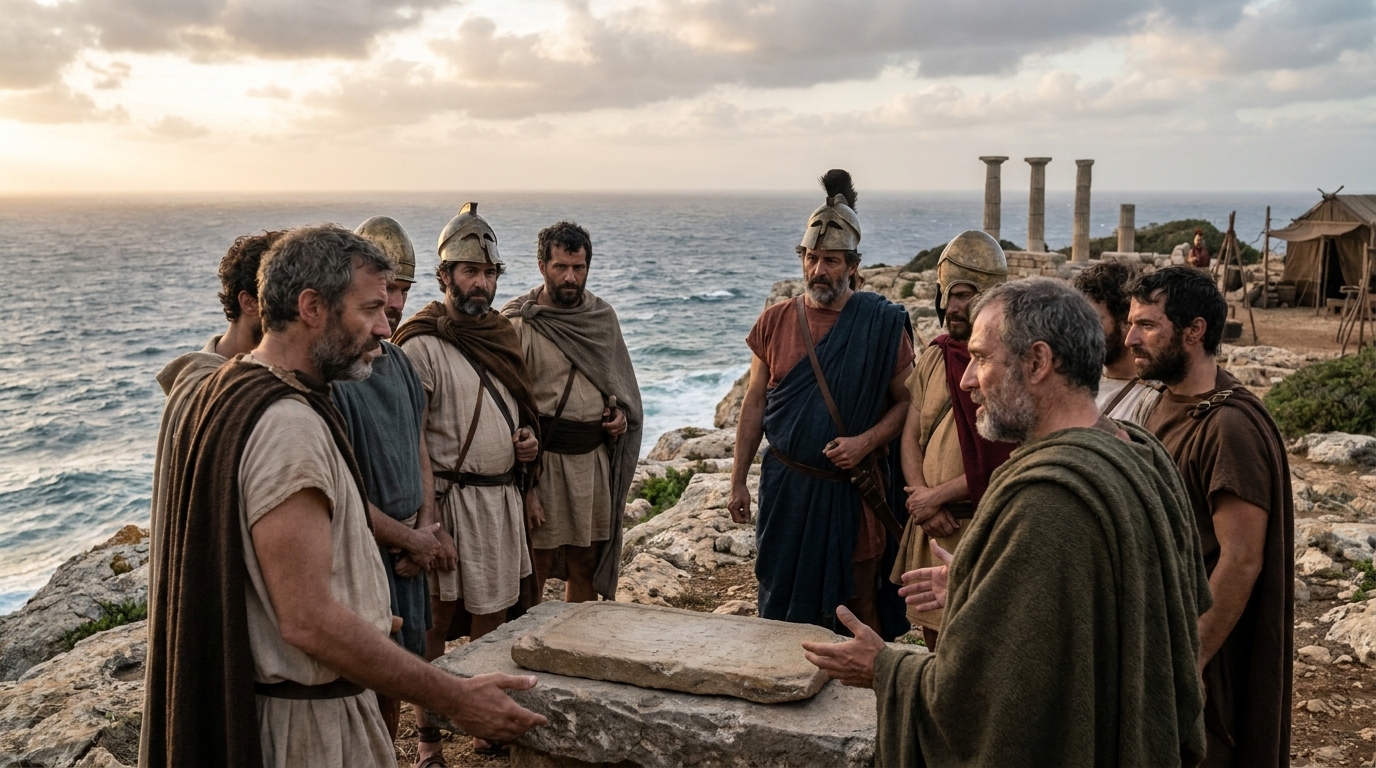
… the Melians surrendered at discretion to the Athenians, who put to death all the grown men whom they took, and sold the women and children for slaves…
Thucydides (~400 BCE, 5.116)
What Beat Athens?
In simple terms the Spartans when on to beat the Athenians. But we can go deeper to wonder if the Athenian’s arrogance probably played a role. The Athenians didn’t value others when they were powerful and created resentments and enemies. Later in the war the massive Athenian campaign to seize Scilly was an unmitigated disaster, undermining their power and eventually allowing the city of Athens to fall to Sparta.
The Athenians became scared that they would be treated by the Spartans in the brutal way they had treated the Melians. Yet, the Spartans, despite being truly awful proto-fascists, dismantled the Athenian walls to weaken the city but avoided the mass slaughter of its people. When the Spartans are behaving better than you, then you know you are doing something very wrong.
It was not the mass killing of the Melians that doomed the Athenian Empire. That said, an attitude that everyone must do what you say because you are powerful is incredibly short-sighted. It will come back and bite you in the arse at some point.
Is There A Lesson For Any Modern Leader?
No, I can’t think of any.
So, is there a lesson for everyday people?
Value Others When You Are Powerful
You probably don’t control a military as relatively powerful as the Athenian one but that doesn’t mean that there aren’t lessons. There are good moral reasons for treating others well but even if that isn’t your concern there are compelling practical arguments. Things change in life, even if you are the top dog now you won’t always be. What goes up comes down. It is worth thinking of how you would like someone with power to behave towards you. We want powerful people to value the less powerful. Power should be something you use to make all around you better.
Next time you find yourself with power and are behaving non-ideally (and we all do it, no one is perfect) you don’t need to think of the massacred and enslaved Melians. Think of the Athenians. Things changed for them. Make sure you have set a good example for whoever has power next.
For more of my random thoughts on Ancient Greece that I hope are at least a little relevant see Alexander The Great Man?, What’s With The Alexander Stuff?, Emulating Alexander The Great, and Do You Really Need A Dodgy Historical Example?
Read: Thucydides (~404-400 BCE) The Melian Dialogue in History of the Peloponnesian War 5.84-116.